

A cappuccino or latte tastes great on its own, of course. But when beautiful latte art appears in the milk foam, coffee instantly becomes an experience. Latte art is the technique whereby a barista pours patterns into the milk foam of a coffee drink. Think of a heart, a tulip or a rosetta. Not only does it look impressive, it also shows that the coffee has been prepared with care and skill.
For many guests, the moment the barista sets down the cup with a perfect pattern in the foam is a little ‘wow’ moment. At events, trade fairs and corporate parties, this detail adds to the overall experience around the coffee bar. Guests watch, take photos of their coffee and often linger at the bar for a while.
What exactly is latte art?
Latte art is created by combining a well-brewed espresso with perfectly frothed milk. The barista pours the milk into the espresso in a specific way, creating patterns in the milk foam.
The secret lies in three elements:
• an espresso with a rich layer of crema
• velvety-soft microfoam instead of coarse milk foam
• a barista who pours the milk correctly
Microfoam is milk in which the air bubbles are as small as possible. This makes the foam silky smooth and ensures it blends well with the espresso. Only when the milk’s texture is perfect can a barista create clear latte art designs.
The most famous latte art designs
Baristas often start with simple shapes and gradually build on these to create more complex patterns. The three most common latte art patterns are:
• Heart
• Rosetta (a leaf pattern)
• Tulip
The heart is usually the first latte art design that baristas learn. This is followed by more complex designs such as the rosetta, where the barista moves the milk jug back and forth whilst pouring. A tulip consists of several layers of milk poured on top of one another.
Experienced baristas can take creative patterns much further, but these three shapes form the basis of virtually all latte art.
Why latte art is important to the coffee experience
Latte art isn’t just a visual detail. It also says a lot about the quality of the coffee and the barista’s technique. After all, to create beautiful latte art, the milk must be frothed to perfection and the espresso must be extracted properly.
This means that a cappuccino with latte art usually has a better texture as well. The milk foam is creamy, the coffee is well-balanced and the temperature is just right.
Furthermore, latte art plays a major part in the overall experience. At events, a coffee bar staffed by baristas often automatically attracts attention. Guests can watch the coffees being prepared and are more likely to strike up a conversation with the barista.
Latte art at events, trade fairs and corporate parties
At events, it’s all about the experience. These days, good coffee is a standard part of that. A mobile coffee bar A place where baristas make cappuccinos and lattes with latte art instantly creates a professional atmosphere.
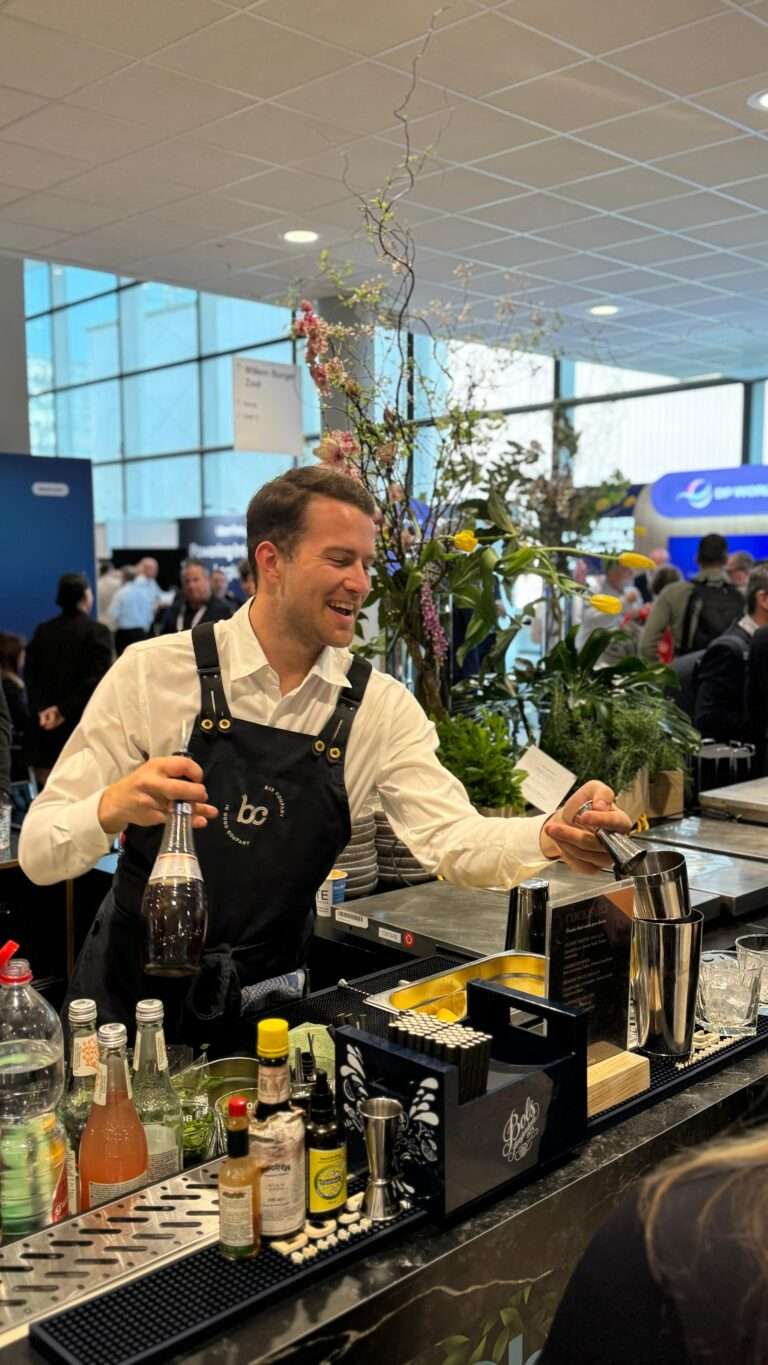
At Bar Company, our baristas run coffee bars at trade fairs, festivals, company openings and conferences. Whilst guests order their coffee, our baristas prepare fresh espressos and serve cappuccinos with latte art.
This makes the coffee bar not just a place to get a coffee, but also a place where guests linger for a while. It encourages interaction and contributes to the welcoming atmosphere of the event.
Would you like to treat your guests to some professional coffee specialities? If so, you can easily order a coffee bar with baristas Hire from Bar Company. Our baristas prepare hundreds of coffees a day and ensure that every cappuccino is served to perfection.
What tools do you need for latte art?
To create latte art, you need a few basic tools. With the right equipment, it becomes much easier to achieve good results.
• espresso machine with a steam wand
• milk jug with spout
• fresh coffee beans
• whole milk or barista oat milk
The espresso machine’s steam wand is essential for frothing milk into microfoam. With a good milk jug, the barista can then pour in a controlled manner to create patterns.
Latte art as a little coffee show
At events, latte art can even turn into a mini-show. An experienced barista works quickly and precisely whilst preparing cappuccinos and lattes. In no time at all, dozens of cups featuring different patterns appear.
Guests often stop for a moment to watch the coffee being made. This makes the coffee bar a focal point at the event. It enhances the image of the brand, the stand or the venue.
Frequently asked questions about latte art
To make latte art, you’ll need an espresso machine with a steam wand, a milk jug and fresh milk. The milk needs to be frothed into microfoam so that it mixes well with the espresso.
Whole milk usually works best because its fat content produces a creamy microfoam. Barista-grade oat milk can also work well if it has been specially developed for coffee drinks.
This is often because the milk hasn’t been frothed properly. Large air bubbles or foam that’s too stiff make it difficult to pour patterns. An espresso without a good layer of crema can also affect the result. Our baristas are specially trained in this.
Yes, that’s certainly possible. When you hire a coffee bar with baristas from Bar Company, our baristas will serve cappuccinos and lattes with latte art to your guests. This gives every cup of coffee a professional look and makes coffee a real experience at your event.